You are standing in the grocery aisle, staring at a wall of olive oil. There are forty-two varieties. Some are extra virgin, some are cold-pressed, some are infused with rosemary, and the prices range from five dollars to fifty. You came in for one bottle, but five minutes later, you are still standing there, feeling a strange, rising sense of irritation. Eventually, you grab the same brand you always buy—or worse, you walk away without buying anything at all.
This isn’t just a personal quirk; it is a documented psychological phenomenon. In a world that equates freedom with the number of options available to us, we are increasingly finding that abundance comes with a hidden tax. As the resident psychology writer here at The Scroll, I want to dive into why our brains, evolved for survival in environments of scarcity, are fundamentally ill-equipped for the modern age of infinite choice.
The 35,000-Decision Marathon
We often think of "deciding" as something we do for big life events: choosing a career, a partner, or a home. However, research suggests that the average adult makes a staggering 35,000 decisions every single day [7]. That breaks down to roughly 2,000 decisions for every hour you are awake.
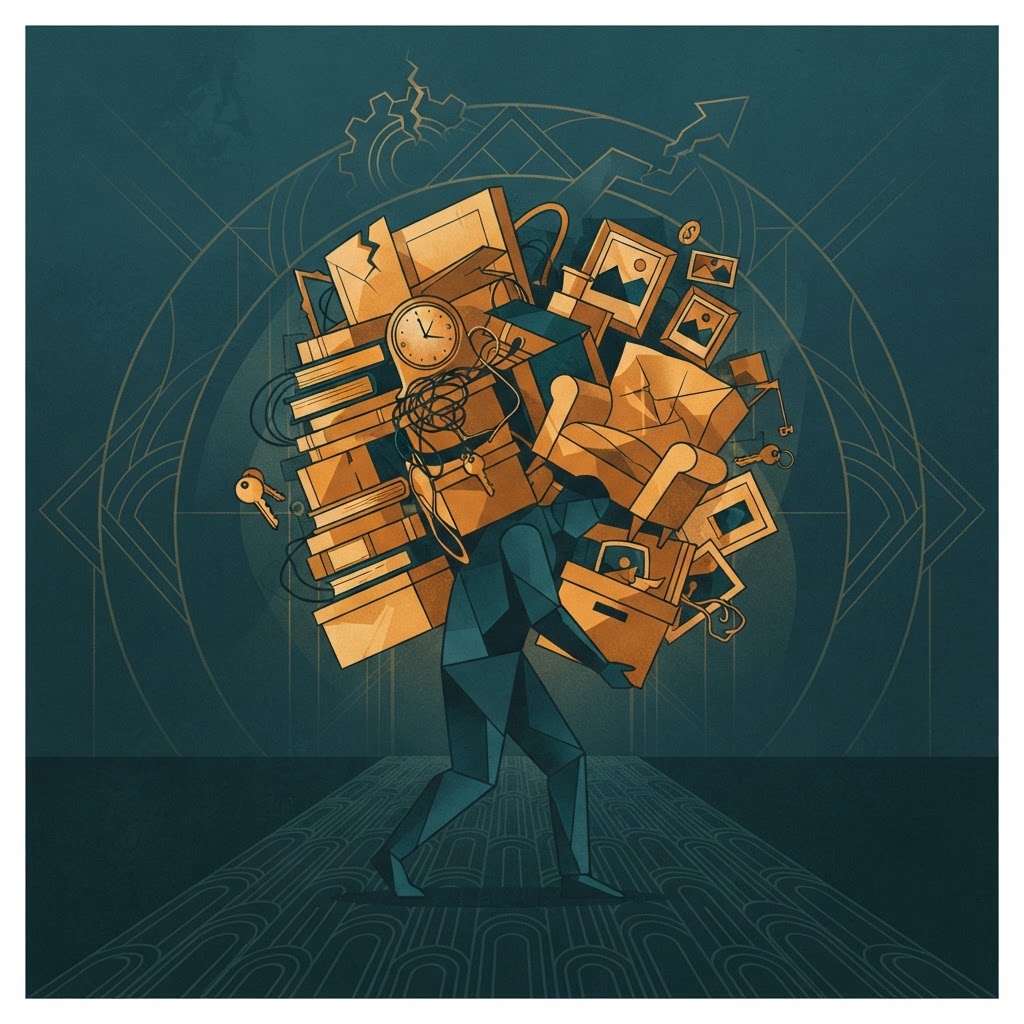
Every choice—from whether to hit the snooze button to which email to answer first—acts like a small withdrawal from a finite mental bank account. This cumulative drain is known as decision fatigue. Unlike physical exhaustion, which you feel in your muscles, decision fatigue is a "dull sense of overload" that sneaks up on you [6]. You might not realize your mental battery is low until you find yourself snapping at a colleague or impulsively buying a candy bar at the checkout counter because you no longer have the energy to say no.
Choice Overload: When More is Less
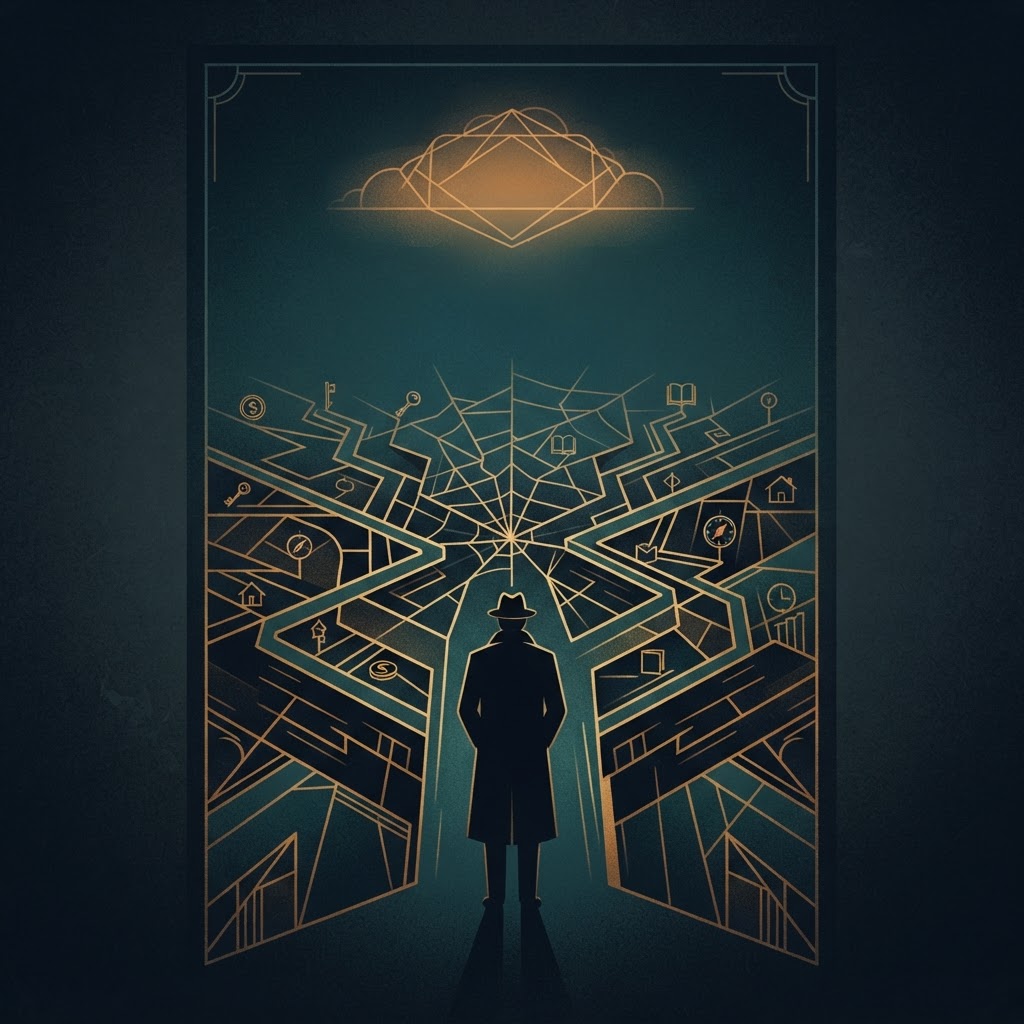
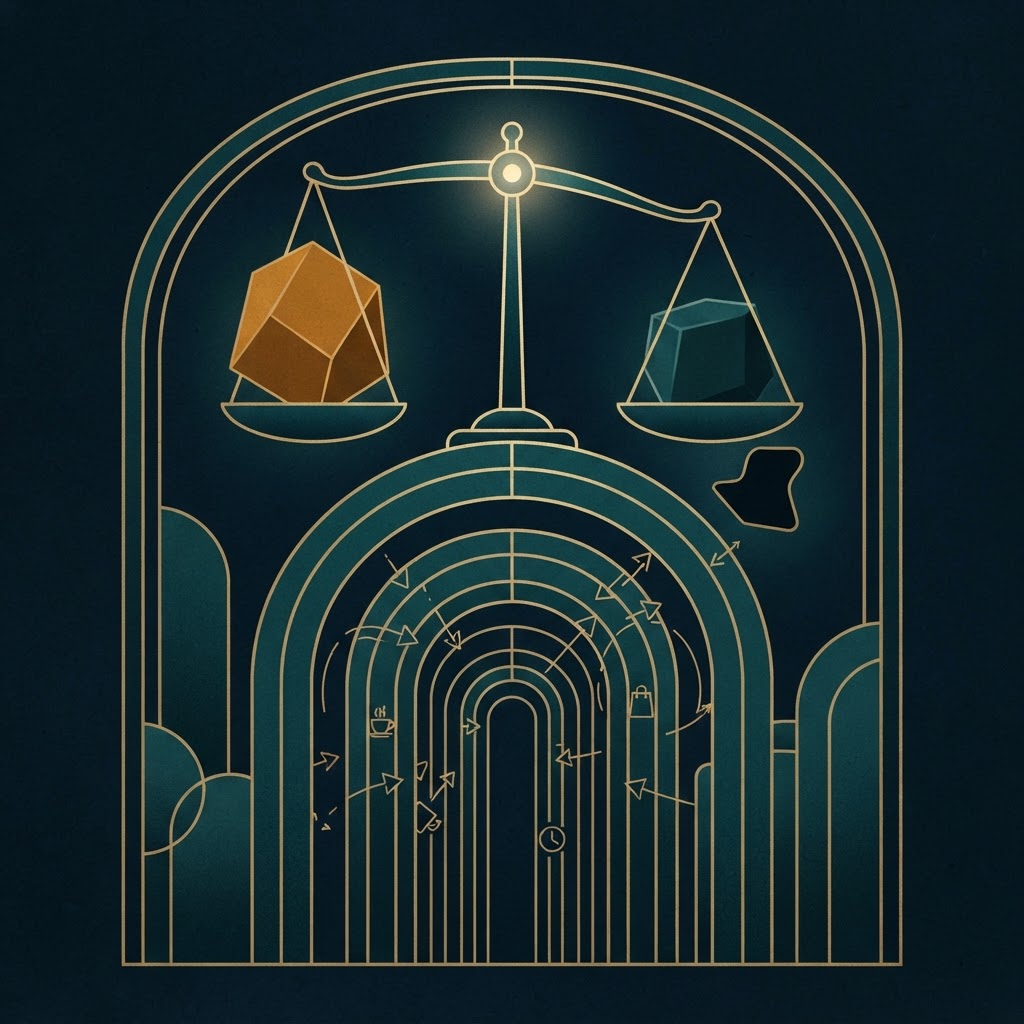
While decision fatigue refers to the cumulative exhaustion of choosing throughout the day, choice overload bias (also known as the Paradox of Choice) occurs in the moment when we are presented with too many options at once [1].
Logically, we assume that more choices are better because they increase the likelihood of finding the "perfect" fit. However, behavioral economists have found that large assortments often lead to "decision paralysis" [2]. When the number of trade-offs becomes too high—such as comparing the health benefits, price, and taste of dozens of different cereal brands—the brain experiences a high cognitive load [6][10].
"While we tend to assume that more choice is a good thing, research has shown that, in many cases, we have a harder time choosing from a larger array of options." [1]
This overload doesn't just make us slower; it makes us less happy. Even when we do make a choice from a large set, we are more likely to experience "buyer's remorse," wondering if one of the other thirty-nine options would have been better [11].
The Science of the "Mental Shortcut"
Why does the brain shut down? It comes down to energy preservation. The brain is a highly efficient organ that monitors energy output closely [29]. When mental resources are depleted—a state sometimes called ego depletion—the brain begins looking for shortcuts to save power [9][23].
According to Dr. MacLean of the American Medical Association, decision fatigue typically leads to four specific behaviors:
- Procrastination: Putting the decision off until later to avoid the mental effort [23].
- Impulsivity: Making a rash choice based on little evidence just to get the process over with [23].
- Avoidance: Doing nothing at all, which often leads to missed opportunities [23].
- Indecision: Battling back and forth between choices without reaching a conclusion [23].
This is why you are more likely to order unhealthy takeout at 7:00 PM than you were at 7:00 AM. Your "executive function"—the part of the brain responsible for long-term planning and self-control—is simply too tired to fight your basic desires [24].
Algorithmic Simplification: The Invisible Hand
Modern technology has recognized our collective decision fatigue and turned it into a feature. Streaming services like Netflix and social media platforms use recommendation engines to manage the "abundance" they host [3].
On the surface, these algorithms are helpful; they narrow down 60,000 titles into a "Top 10 for You." However, psychologists warn that when we are cognitively overloaded, we become more likely to trust these "recommended" labels blindly [3]. We trade our autonomy for relief from the burden of choice, allowing systems to shape our perceptions and behaviors while maintaining the illusion of freedom [3].
How to Reclaim Your Mental Energy
If we cannot escape the 35,000 decisions of modern life, how do we protect our brains from the drain? The answer lies in choice architecture—the way we structure our daily lives to minimize unnecessary friction [9].
1. Automate the Mundane
High-achievers like Steve Jobs and Barack Obama famously wore the same outfit every day to eliminate one morning decision [19]. You can apply this to your own life by creating routines that put unimportant tasks on autopilot. Eat the same breakfast, set a consistent wake-up time, and meal-prep your lunches [23].
2. Tackle Big Decisions Early
Because decision-making quality deteriorates as the day goes on, the most consequential choices should be made in the morning when your mental battery is full [7][9]. Avoid making major financial or relationship decisions late at night when you are more prone to impulsivity or avoidance [23].
3. Limit Your Own Options
When shopping or browsing, intentionally limit your search. Tell yourself you will only look at the first five options, or pick a "default" brand for household staples. By narrowing the field yourself, you prevent the cognitive load from reaching the tipping point of paralysis [3][5].
4. Recognize the Signs
If you find yourself feeling unusually irritable, staring blankly at a menu, or struggling with minor choices, recognize it as decision fatigue rather than a character flaw [6][21]. The best remedy? Rest. As psychotherapist Natacha Duke notes, if you are up at 3:00 AM Googling your symptoms, the best decision you can make is to go to sleep [21].
Conclusion
We live in an era of unprecedented variety, but our cognitive resources remain finite. By understanding the psychology of choice overload, we can stop blaming ourselves for "indecisiveness" and start building systems that protect our mental clarity. Freedom isn't about having every option available; it's about having the mental energy to choose the ones that actually matter.
Sources
- Choice Overload Bias - The Decision Lab – https://thedecisionlab.com/biases/choice-overload-bias
- An Analysis on the Impact of Choice Overload to Consumer Decision Paralysis – https://www.researchgate.net/publication/357695637_An_Analysis_on_the_Impact_of_Choice_Overload_to_Consumer_Decision_Paralysis
- Dark Psychology: Choice Overload & Decision Fatigue - The Brink – https://www.thebrink.me/when-freedom-overwhelms-the-dark-psychology-of-too-much-choice/
- When and Why Choice Fatigue Determines What We Purchase – https://econlife.com/2018/05/shoppers-choice-fatigue
- Decision Fatigue: Why Simple Choices Feel Draining - CogniFit Blog – https://blog.cognifit.com/decision-fatigue-why-simple-choices-feel-draining/
- Decision Fatigue: Why Your Brain Gets Tired of Choosing and What to Do About It - Allianz Care – https://www.allianzcare.com/en/about-us/blog/decision-fatigue.html
- Decision Fatigue – Everything You Need to Know - InsideBE – https://insidebe.com/articles/decision-fatigue
- The Paradox of Choice - The Decision Lab – https://thedecisionlab.com/reference-guide/economics/the-paradox-of-choice
- Decision fatigue - Wikipedia – https://en.wikipedia.org/wiki/Decision_fatigue
- 8 Signs of Decision Fatigue and How To Cope - Cleveland Clinic – https://health.clevelandclinic.org/decision-fatigue
- What doctors want patients to know about decision fatigue - American Medical Association – https://www.ama-assn.org/public-health/behavioral-health/what-doctors-want-patients-know-about-decision-fatigue
- Decision Fatigue: What It Is and How to Avoid It - Healthline – https://www.healthline.com/health/decision-fatigue
- Decision Fatigue Is Destroying Your Focus, Motivation and Drive - Entrepreneur – https://www.entrepreneur.com/living/decision-fatigue-is-destroying-your-focus-motivation-and/340755