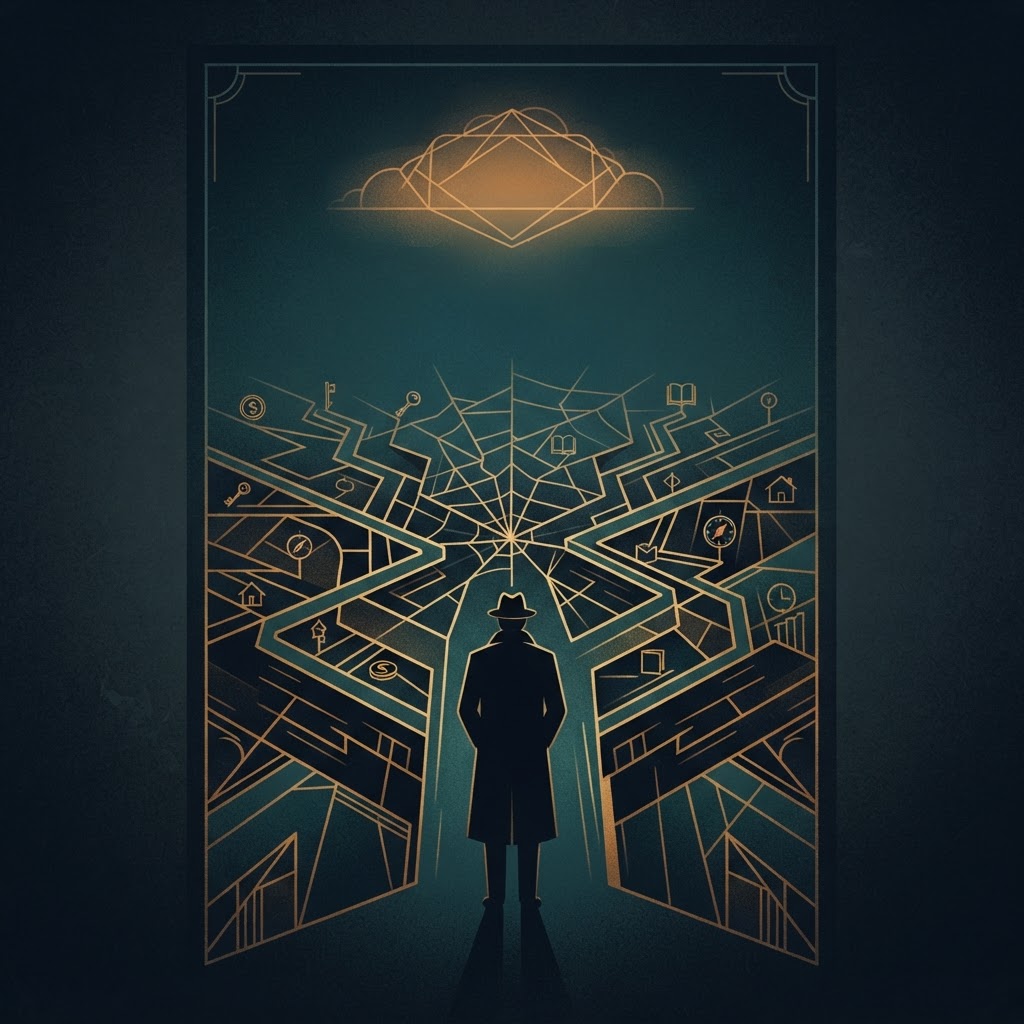
On May 6, public attention often turns toward the emotional labor of nursing. The tributes are familiar. The deeper cognitive structure of the work is less often examined. Nursing is not only compassionate labor. It is also a disciplined methodology for sorting incomplete information, prioritizing under pressure, and acting within constraint. Those same skills appear, in altered form, in creative problem-solving.
This article examines Digital Triage as a conceptual bridge between clinical reasoning and creative practice. The term refers to the process of taking disorganized, high-volume, emotionally loaded inputs and converting them into an ordered sequence of decisions. In plain language: it is the work of turning chaos into a usable next step.
From Clinical Triage to Cognitive Triage in Web Design for Artists
Historically, triage emerged as a response to overload. In military and emergency care settings, practitioners needed methods for making rapid, consequential judgments when time, staffing, and resources were limited. The point was not perfection. The point was prioritization. Assess first. Classify quickly. Intervene where action matters most.
Modern nursing extends that logic into daily practice. A nurse rarely encounters information in neat order. Instead, the environment presents noise: symptoms, family concerns, timing conflicts, documentation gaps, equipment alerts, and shifting risk. The nurse’s task is to impose structure without losing nuance. Observe. Group the data. Identify the urgent variable. Reduce uncertainty enough to act.
Creative work often looks different on the surface, but the underlying cognition is similar. Designers, makers, writers, and founders frequently begin with fragments rather than conclusions. Notes. Half-formed ideas. Contradictory goals. Technical limitations. Emotional investment. Financial pressure. The problem is rarely the absence of ideas. More often, it is unmanaged abundance.
That pattern is especially visible in web design for artists, where creative identity, technical constraints, and audience needs often arrive at once. The first problem is usually not aesthetics. It is cognitive sorting. Which information matters first? Which function is essential? Which choice can wait?
Digital Triage names that pattern. It treats creative overwhelm not as a personal failure, but as an information-processing problem.
The Psychology of the Two-Option Framework in Website Building for Artists
One of the most useful tools in high-stress decision environments is constraint. When the brain is overloaded, more options do not necessarily produce better outcomes. They often produce delay. This effect is well documented in research on decision fatigue, cognitive overload, and choice architecture. As the number of possibilities increases, so does the mental cost of evaluation. Attention fragments. Confidence declines. Avoidance rises.
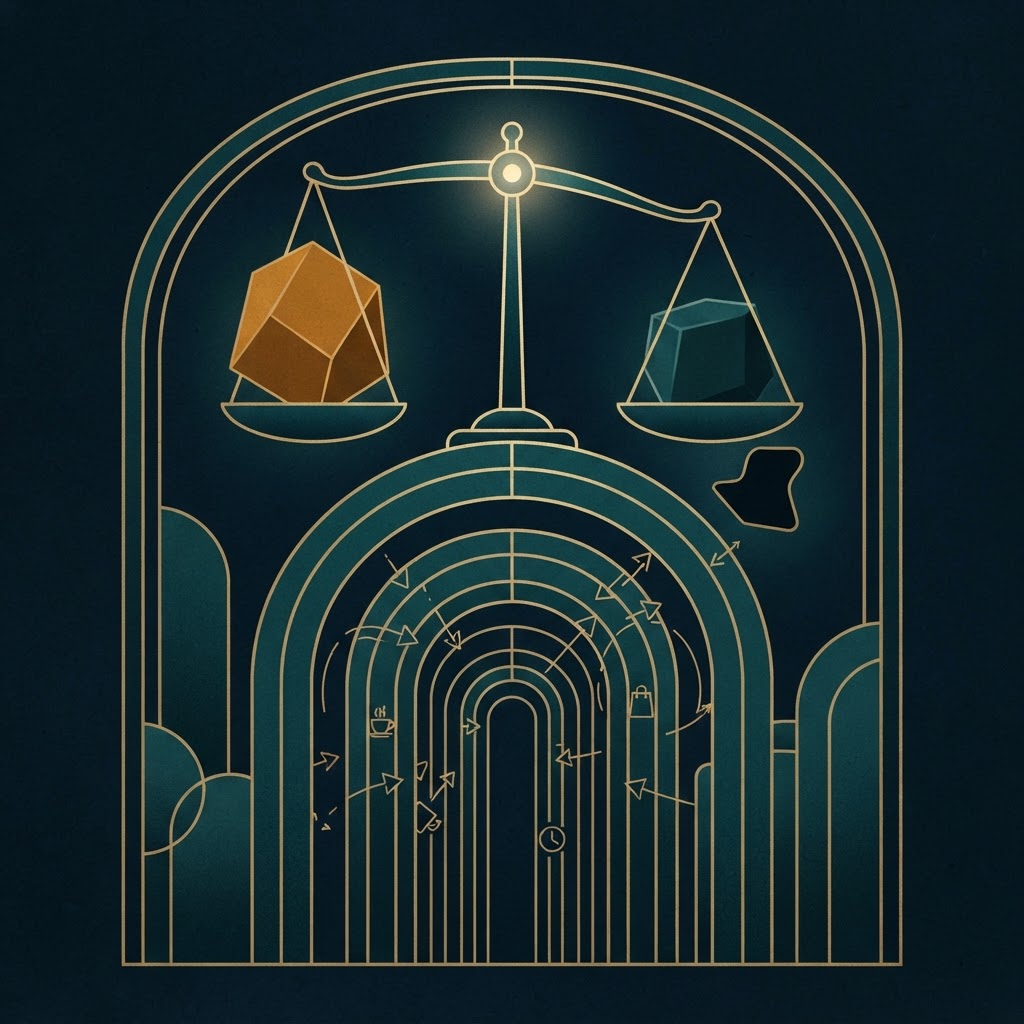
The Two-Option Framework addresses that problem by reducing the field of choice to two plausible next moves.
This is not a gimmick. It is a cognitive support strategy.
In clinical settings, narrowed options help preserve working memory during stress. In creative settings, the same principle can reduce rumination and restore momentum. Instead of asking someone to evaluate ten platforms, twelve layouts, or twenty strategic directions, the framework asks a simpler question: which of these two paths better fits the current goal?
This approach is particularly useful in website building for artists, where excessive choice often appears productive while actually slowing progress. Too many theme options, navigation models, platform features, or portfolio structures can increase hesitation rather than improve outcomes.
That matters because overwhelmed minds do not need maximal possibility. They need a clear threshold for action.
A two-option structure helps by:
- reducing comparison load
- limiting perfectionistic spirals
- making tradeoffs visible
- preserving a sense of agency
- increasing the likelihood of follow-through
The method is especially effective when the person making the decision is already carrying emotional or cognitive strain. Under those conditions, the ideal choice is often less important than making a workable choice in time.

Why Nursing Methodology Transfers to Branding for Small Creative Business
Nursing education trains practitioners to move between observation and action with unusual speed. The process is methodological. Assess. Prioritize. Plan. Intervene. Reassess. That sequence is clinical, but it is also broadly applicable to any environment where the inputs are messy and the stakes feel personal.
Creative problem-solving benefits from the same structure.
First, both domains require pattern recognition. A nurse detects meaningful changes across incomplete data. A creative practitioner detects meaningful direction inside scattered ideas.
Second, both require tolerance for ambiguity. Neither clinical care nor creative work begins with total certainty. Progress depends on the ability to act before every variable is resolved.
Third, both require iterative correction. In nursing, the first intervention is rarely the final one. In creative work, the first draft, first system, or first structure is also rarely the last. What matters is building a feedback loop that can support refinement.
This transfer is especially clear in branding for small creative business, where identity work is often treated as purely aesthetic despite being deeply structural. Branding requires triage: determine what the audience must understand first, what message carries the most weight, and which elements support recognition rather than distract from it.
Seen this way, creativity is not the opposite of methodology. It often depends on it.
Burnout Data and the Need for Cognitive Recovery
Any discussion of nursing cognition must also include burnout. In recent years, multiple workforce reports have shown sustained distress across the profession, with roughly one in three nurses reporting an intention to leave or consider leaving their role. The exact percentages vary by survey and setting, but the pattern is consistent: chronic overload, moral strain, staffing pressure, and administrative burden have produced a measurable exhaustion of attention, emotion, and executive function.
Burnout is not just feeling tired. It alters how people process information. Concentration narrows. Decision-making becomes harder. Emotional regulation weakens. The nervous system shifts toward protection rather than exploration.
That context helps explain why many nurses are drawn to deeply tactile, self-directed forms of making. The appeal is not trivial. It may function as a form of neurological reset.
The Artisan Mindset as Neurological Reset
The term artisan is useful here when defined broadly: not as a product category, but as a mode of attention. The artisan mindset centers focused handwork, visible progress, sensory feedback, and personal authorship. It asks the brain to engage differently.
From a psychological perspective, that shift matters.
Repetitive creative activity can lower cognitive noise by narrowing attention to immediate, manageable variables. Texture. Color. sequence. motion. The hands begin to do what overstressed cognition often cannot: create order through rhythm. This kind of making can also restore a sense of agency, which burnout tends to erode. In systems-heavy work, people often feel interchangeable. In artisanal work, the link between effort and outcome is direct.
The result is not magic, and it is not a substitute for structural reform. It does, however, help explain why creative practice can feel restorative to those whose professional lives require constant vigilance. The mind moves from surveillance to shaping. From interruption to sequence. From triage for others to regulated focus for the self.

Digital Triage as a Practical Model for Marketing for Makers
Digital Triage can therefore be understood as a practical synthesis of three elements:
- clinical prioritization
- psychological load reduction
- creative structuring
Its core premise is simple. Do not begin with everything. Begin with what is actionable. Do not maximize options. Narrow them. Do not treat overwhelm as a character flaw. Treat it as a design problem.
That orientation is useful well beyond nursing. It applies to anyone facing high-choice digital environments, complex projects, or creative work that has become cognitively cluttered. The lesson from nursing methodology is not merely to work harder under pressure. It is to build systems that make pressure easier to navigate.
The same principle applies to marketing for makers. Effective communication rarely begins with posting everywhere or saying everything. Start by identifying the primary audience, the clearest message, and the smallest repeatable action. Reduce noise before adding reach.
Conclusion: Digital Presence as Structured Cognitive Work
The relationship between nursing and creativity is often framed sentimentally, as though one is service and the other is escape. A more accurate view is methodological. Nursing trains the mind to identify signal within noise. Creative practice uses that same capacity to build form, sequence, and meaning.
Digital Triage sits at that intersection. It offers a framework for understanding how people move from overload to clarity, especially when the next decision feels harder than it should. The Two-Option Framework, in particular, shows how small structural constraints can protect cognition when fatigue is high.
Whether the task involves web design for artists, website building for artists, branding for small creative business, or marketing for makers, the underlying problem is often the same: too many inputs, too little structure, and too much pressure to decide perfectly. The methodological response is also the same. Sort the variables. Narrow the options. Build the next step.
Chaos, in this model, is not the enemy. Unstructured chaos is. The work is to sort it. Name it. Reduce it. Then move.